Introduction
Pakistan’s agriculture sector is at a crossroads. As the backbone of the economy, agriculture employs about 40% of the labor force and contributes around 24% of GDP. Beyond economics, it underpins food security and rural livelihoods for tens of millions. Recognizing the sector’s critical role, Pakistan has a long history of agricultural censuses (six prior censuses since 1960), as well as standalone livestock and machinery counts. These efforts provide invaluable data on land use, farming practices, and rural assets to guide policy. The newly released 7th Agricultural Census 2024 marks a milestone as the first integrated digital census of agriculture in Pakistan’s history. This integrated approach combined what were once separate surveys – covering farm lands, livestock, and agricultural machinery – into one comprehensive exercise, leveraging modern technology for data collection and analysis.
This commentary distills the main findings of the 7th Agricultural Census and discusses their implications at both the national and provincial levels. We focus on five key themes emerging from the census data: landholding patterns, irrigation and water usage, livestock trends, farm mechanization, and digital data collection. For each theme, we highlight important trends and disparities (including differences among provinces) and identify challenges or gaps facing Pakistan’s agriculture. We then offer curated, actionable policy recommendations aimed at policymakers, stakeholders, and the public to address these challenges and harness new opportunities. Our goal is to present these insights in clear, accessible language – avoiding technical jargon – so that a broad audience can understand the significance of the census findings and support evidence-based actions for agricultural development.
Before diving into the themes, it is worth noting how the digital methodology of the 2024 census itself is a game-changer. Unlike past paper-based counts, this census used tablet-based data collection with geo-tagging of every agricultural household, real-time dashboards for monitoring fieldwork, and instant synchronization of data to a central server. This not only improved accuracy and transparency ), but also dramatically sped up processing – the results were compiled in just four months after fieldwork. Such innovations have set a “new gold standard” for large-scale data collection in Pakistan. The rich, geo-referenced dataset produced will enable more granular analysis and targeted policy interventions than ever before. With that context, we now turn to the substantive findings and their implications for Pakistan’s agricultural future.
Landholding Patterns: Changing Farm Structures
One of the most striking findings of the 2024 Agricultural Census is the surge in the number of farms coupled with a decline in average farm size, indicating ongoing land fragmentation. Pakistan now has 11.7 million farm households operating cropland, a dramatic increase from about 8.3 million farms recorded in the 2010 census. In other words, the count of farms grew by roughly 42% in fourteen years – far outpacing population growth – largely due to subdivision of land among heirs and incorporation of previously uncounted small holdings (particularly in Khyber Pakhtunkhwa, as discussed below). Total farmed area also expanded (from ~52.9 to 59.3 million acres between 2010 and 2024) but much more modestly. Consequently, the average farm size has shrunk from about 6.4 acres in 2010 to just 5.1 acres in 2024 nationally. The average cultivated land per farm likewise dropped to ~4.5 acres, down from 5.2 acres in 2010. Smaller farm sizes can pose a challenge for productivity, making it harder for farmers to achieve economies of scale or justify investments in modern inputs and machinery.
Figure 1 illustrates how farm numbers and sizes have changed, both nationally and by province. We see a nationwide jump in farm count (orange bars vs. yellow for 2010) and corresponding decline in mean holding size in most regions. The provincial breakdown reveals important disparities. Punjab – the breadbasket province – still has by far the largest share of farms (over 5 million, around 43% of the country’s total). But interestingly, Punjab’s farm count decreased slightly since 2010. This may reflect consolidation in some areas or the separation of Islamabad’s data. In contrast, Khyber Pakhtunkhwa (KPK) saw an explosion in reported farms – rising to 4.17 million from only ~1.54 million in 2010. Part of this three-fold increase is likely due to more comprehensive coverage of small upland farms and previously unregistered holdings, enabled by the census’s digital mapping and perhaps an expanded definition of “agricultural household.” Regardless, KPK now accounts for over one-third of all farms in Pakistan, second only to Punjab in count. Meanwhile, Sindh also registered growth in farm numbers (1.83 million, up from 1.11 million) and Balochistan modest growth. These patterns suggest that farming is increasingly occurring on smaller plots and reaching into areas not thoroughly counted before.
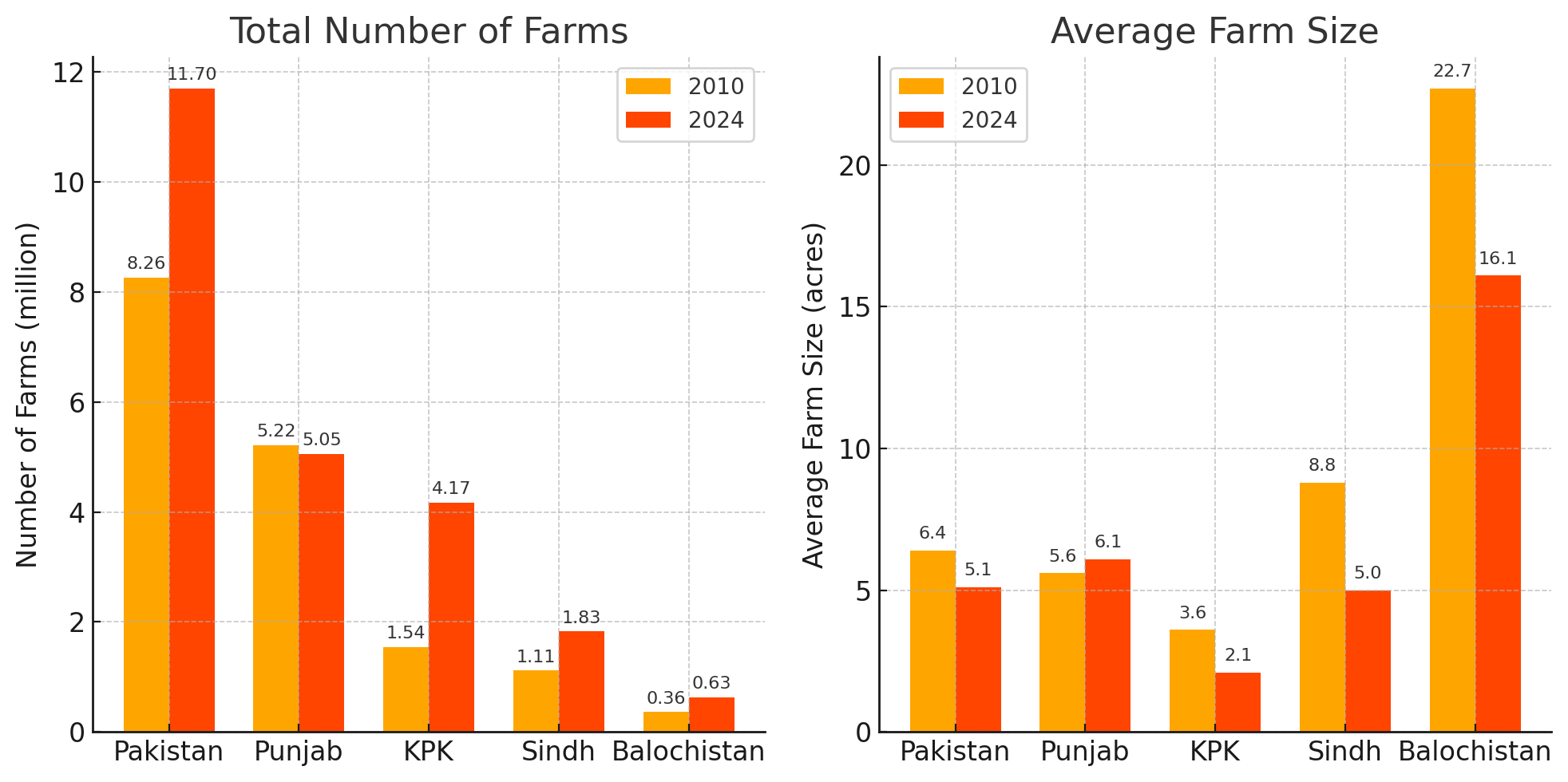
Figure 1: Change in number of farms and average farm size by province, 2010-2024. Farm counts rose sharply while average farm sizes declined in most provinces. Data source: Agricultural Census 2010 and 2024.
Corresponding to the proliferation of small farms is a notable shift in land tenure patterns toward owner-operated farming. The census reports that out of ~11.7 million total farms, 10.39 million are now owner-operated, a sharp increase from about 6.74 million owner farms in 2010. Owners thus represent 89% of all farms in 2024. In contrast, the number of purely tenant farms (where land is rented) declined from ~0.916 million to 0.767 million over the same period. Even mixed owner-cum-tenant holdings slightly decreased. This suggests that tenancy-based farming has declined, and more farmers have acquired their own land or converted rented land to ownership over the past decade. The trend could be due to various factors – from government land distribution programs to farmers purchasing land from retiring landlords, or tenants gaining ownership rights. In any case, a national trend toward land ownership is evident, which could empower farmers to make longer-term investments in their land. However, it also raises questions about how the poorest sharecroppers or landless laborers are faring – they may have been excluded from tenancy or pushed into other sectors if renting opportunities shrank.
At the provincial level, Punjab still contains the largest absolute number of tenant farms (about 335 thousand tenant-only farms), but this is much lower than before. Sindh retains a relatively higher share of tenancy ), reflecting the historical prevalence of landlord estates there – yet tenant farm counts in Sindh also dropped. KPK and Balochistan always had predominantly owner-operated smallholdings and continue to do so. The gender dimension of farm holdings is another important aspect of landholding patterns. The census found that only 1.5% of agricultural households are headed by women, with 98.5% headed by men. This indicates a persistent gender gap in land ownership and decision-making roles in agriculture. Social norms and inheritance practices in Pakistan often result in male family members controlling land assets. The low proportion of female-headed farms highlights an area for policy attention, as women’s access to land and resources is crucial for inclusive agricultural development.
Another revealing insight is the distribution of farms by size categories, which shows a highly skewed structure. Nationally, the vast majority of farms are very small: about 61% of all farms are under 2.5 acres, and nearly 80% are smaller than 5 acres. Yet these 80% of smallest farms collectively operate only one-third of the total agricultural land. In contrast, a tiny fraction of farms are large: for example, holdings above 50 acres constitute less than 0.5% of farms but account for ~9% of land area. The “middle” category of farms (say 5 to 25 acres) represents only about 20% of farms but controls over half of all farmland. Figure 1 already showed how Balochistan stands out with the highest average farm size (16 acres) and a significant share of larger holdings. In Balochistan, only ~58% of farms are below 5 acres (versus 76% in Punjab and a whopping 95% in KPK), and about 10% of Balochistan’s farms exceed 12.5 acres – these larger ranch-style holdings contribute to Balochistan’s average size being three times the national average. Sindh also has somewhat larger farms on average (5 acres) than the national mean, with a portion of big irrigated estates still present. KPK, by contrast, has extremely fragmented holdings – the average farm there is just 2.1 acres, and more than 40% of KPK’s farms are under 1 acre. Punjab falls in between: average farm ~6 acres, with a mix of smallholders and some medium farms in its canal-irrigated plains.
Key Challenges: The landholding trends reveal several challenges. First, the continuing fragmentation of farms – while potentially empowering more families with land – makes it difficult to raise productivity. Tiny, scattered plots inhibit mechanization, efficient water use, and commercialization of agriculture. Smallholders often struggle to access credit and markets, and per-unit costs of inputs are higher. Second, though more farms are owner-operated, many owners have extremely small parcels; land inequality persists in terms of area distribution. A small elite of large landowners still controls a disproportionate share of farmland (especially in Sindh and parts of Punjab), which can influence rural power dynamics and water access. Third, the gender gap in land ownership means women farmers are largely invisible in official land records, limiting their access to institutional support (credit, extension services) that is tied to land title. Finally, the decline in tenancy might indicate fewer sharecropping opportunities for the landless; this could heighten rural poverty if landless laborers have lost livelihoods (unless they found alternatives). Overall, Pakistan’s landholding structure – dominated by millions of marginal farms – is a structural constraint for growth and also a key target for poverty alleviation efforts, since these small farms support some of the poorest households.
Policy Recommendations (Landholding Patterns): To address fragmentation, the government can encourage land consolidation or cooperative farming arrangements. Programs that incentivize voluntary land pooling (e.g. through cooperatives or community organizations) would allow small farmers to aggregate land for joint mechanized cultivation, improving efficiency. Legal reforms could make land leasing easier and more secure, so that small owners might lease out or share operation of land without fear of losing ownership – this would help form larger operational units. At the same time, strengthening land rights for women is critical. Simplifying inheritance procedures and raising awareness can ensure women receive their due share of land; the state could support female-led farms with targeted credit lines and training so that the 1.5% figure improves over time. For landless rural workers, the government should consider reviving or expanding land distribution schemes (allocating state land or purchased private land to landless tenants) accompanied by support to make those new small farms viable. Finally, improving the cadastral system through digitization (building on the digital census data) will help in formalizing land records, reducing disputes, and planning interventions. In summary, policies that promote equitable land access, consolidation for productivity, and inclusion of marginalized groups (women, landless) are needed to turn the census’s landholding insights into a foundation for more productive and just agriculture.
Irrigation and Water Use: Toward Efficiency and Resilience
Water is the lifeblood of Pakistan’s agriculture, and the census data highlight both positive developments and ongoing vulnerabilities in irrigation practices. A headline finding is that Pakistan’s agriculture is becoming even more irrigation-intensive. In 2024, out of 52.8 million acres of cultivated land, 45.94 million acres are irrigated, which is about 87% of all cropland. This represents a notable increase from 2010, when roughly 34.1 million acres were irrigated. In absolute terms, irrigated area expanded by almost 12 million acres over 14 years, while rain-fed (barani) farming area shrank by nearly half – from ~8.4 million acres in 2010 down to only 4.96 million acres in 2024. This shift toward irrigated agriculture is a double-edged sword. On one hand, it reflects investments in irrigation infrastructure and farmers’ adaptation to ensure water supply (which generally boosts yields and reduces rainfall dependence). On the other hand, it underscores growing water consumption in agriculture, raising concerns about sustainability given Pakistan’s water-stressed environment. Groundwater is being tapped at unprecedented rates to achieve this coverage, and the overall irrigation efficiency remains low with traditional methods.
Figure 2 shows the percentage of cultivated land that is irrigated in each province, comparing 2010 and 2024. It is evident that all provinces except Sindh improved their irrigation coverage (Sindh was already extremely high and saw a marginal dip). Punjab’s cultivated area is now 91% irrigated, up from 83%. Khyber Pakhtunkhwa made major gains – jumping from only 57% irrigated in 2010 to 73% in 2024 – by adding many small irrigation schemes and tubewells. Balochistan saw the greatest relative increase, from 62% to 80% of farmland irrigated, thanks to the spread of tubewells, karez rehabilitations, and small dams in that arid province. Sindh remains the most irrigation-reliant region, with around 90% of its farmland irrigated. The national capital region (ICT) and some northern areas still have pockets of rain-fed agriculture, but overall, barani farming is becoming confined to smaller pockets. The diminishing rain-fed area ) is significant – it may indicate that some marginal lands went out of cultivation, or that farmers managed to bring irrigation (e.g. via tube wells or water harvesting) to lands that were previously rain-dependent.
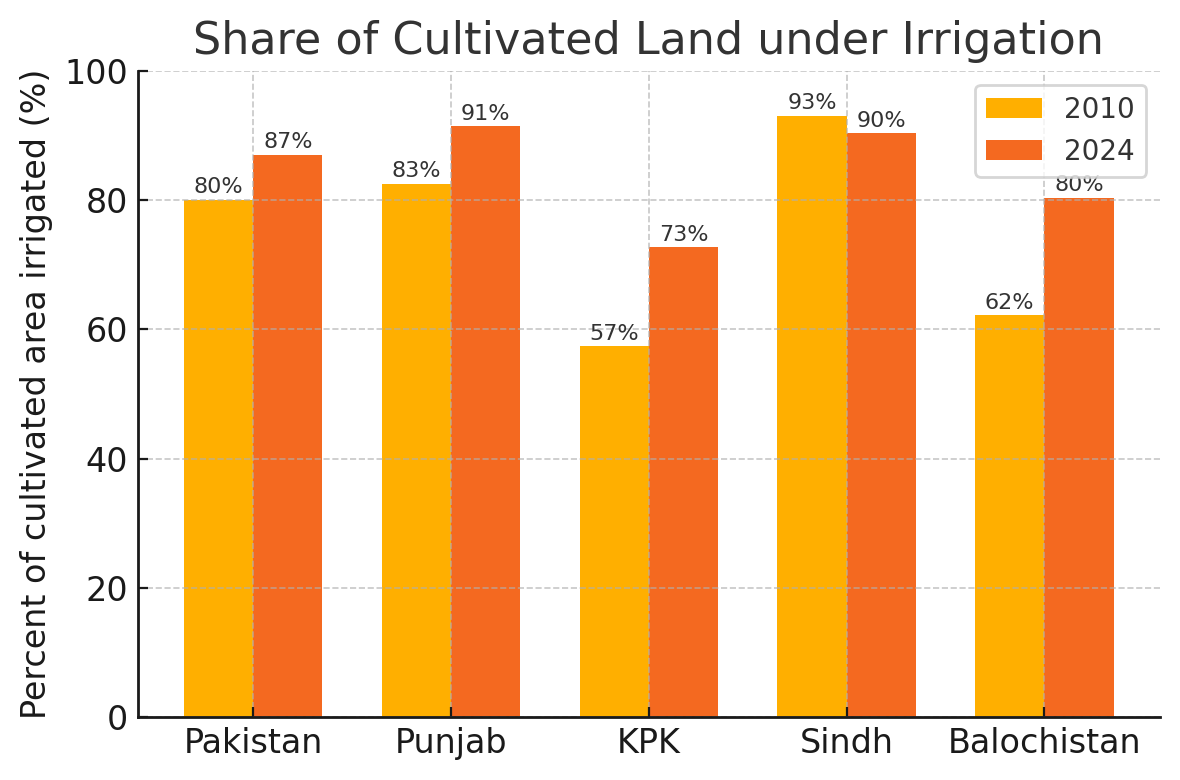
Figure 2: Share of cultivated land under irrigation, by province (2010 vs 2024). Nationwide, the proportion of cropland that is irrigated rose from ~80% to ~87%. All provinces saw gains in irrigation coverage, with particularly large improvements in KPK and Balochistan. Data source: Agricultural Census 2010 & 2024.
The sources of irrigation water are another critical aspect captured by the census. Pakistan’s irrigation system is historically dominated by canals (from the Indus Basin Irrigation System) supplemented by groundwater tubewells. The 2024 data show that canal irrigation remains vital but groundwater use has become equally, if not more, important in some areas. Out of the 45.9 million irrigated acres, about 14.48 million acres are irrigated by canals only. An additional ~13.5 million acres are irrigated by a mix of canals and tubewells/pumps – this combined-method area actually saw a slight decline from 13.9 million in 2010, perhaps due to more areas relying exclusively on one source. Meanwhile, purely groundwater-driven irrigation (wells and pumps without canals) is partially captured under categories that the report lists as “Un-specified/Other sources,” which expanded substantially to ~1.66 million acres. In provinces like Punjab, the majority of canal-commanded areas also use tubewell supplements, which means groundwater extraction is widespread. Punjab alone accounts for 27.09 million acres of irrigated land, the largest of any province; much of this is sustained by over one million private tubewells tapping aquifers. Sindh has about 7.32 million acres irrigated. KPK and Balochistan have smaller absolute irrigated extents ), but rely on diverse sources: in KPK, canals cover some areas but others depend on hill torrents and spring channels (rod-kohi), while in Balochistan, farmers use ancient karez systems and modern tubewells. Notably, the census confirms that traditional methods like Rod-Kohi (spate irrigation from hill torrents) and Karez (underground tunnel aquifers) are “still functional” in parts of KPK and Balochistan, contributing non-trivial amounts of irrigated acreage. Balochistan has 432,000 acres under karez or spring irrigation combined, reflecting the persistence of these community-managed systems despite groundwater pumping.
A forward-looking inclusion in this census is data on modern irrigation techniques. For the first time, farmers were asked about sprinkler and drip irrigation systems (including center-pivots). The results show very low adoption so far – only about 41,000 acres nationwide are irrigated by sprinkler/drip methods. This is an almost negligible fraction (<0.1%) of total irrigated land. The number was effectively zero or unrecorded in the 2010 data, so any increase is positive, but clearly Pakistan has a long way to go in adopting water-efficient irrigation. The low uptake may be due to high initial costs, lack of technical knowledge, or the suitability of these systems mainly for orchards and high-value crops. The census also identified “tank/bandat” irrigation (small storage ponds or bunded reservoirs) accounting for about 1.16 million acres in 2024, suggesting growth in rainwater harvesting and small dam projects that collect runoff for later use. This has been especially relevant in northern KPK and upland Balochistan where canal infrastructure is absent.
Key Challenges: Pakistan’s expanding irrigation frontiers come with serious challenges. Water resources are finite and already under stress from climate change (glacier retreat, altered monsoon patterns) and upstream usage. The census indicates heavier reliance on groundwater, which raises the risk of aquifer depletion. In many areas of Punjab and Balochistan, groundwater is being extracted faster than it is replenished, leading to falling water tables. Irrigation efficiency remains low – the dominance of flood irrigation via canals and watercourses means a lot of water is lost to seepage and evaporation before reaching crops. The near-absence of drip/sprinkler adoption highlights a technological gap in water-saving practices. Additionally, the inequities in water distribution persist: large canal users in head areas often get surplus water, while tail-end farmers struggle. Small farmers without tubewells depend on canal timing and often suffer if rotations falter. Another challenge is salinity and waterlogging, byproducts of excessive canal irrigation in Sindh and southern Punjab, which render land unproductive. As the census did not directly measure soil health, this remains a hidden issue but one linked to water use patterns. Finally, with 87% of agriculture under irrigation, the sector is extremely vulnerable to any shocks in water supply – whether droughts, infrastructure failures, or disputes in Indus water allocations. The shrinking rain-fed area means less crop area acts as a buffer; if irrigation supply falters, there is not much “rain-fed reserve” to rely on.
Policy Recommendations (Water Use): Ensuring sustainable water use in agriculture is paramount. The census findings make a strong case for investing in modern irrigation technology at scale. Government programs should subsidize and promote drip and sprinkler systems, especially for water-intensive crops and in water-scarce regions. These technologies can improve water-use efficiency by 30-60%. Pilot projects have shown success, but adoption needs to move beyond pilot to mainstream. Alongside hardware, farmers need training on these systems and on basic water-saving agronomy (like laser land leveling, bed planting, etc., which reduce water needs). Groundwater regulation is another priority – currently, tube wells are largely unregulated. Policies could introduce a permit or fee system for large-capacity wells and encourage community management of aquifers. Conjunctive use of surface and groundwater should be optimized (e.g. using canals when available and resting aquifers). Moreover, canal infrastructure must be modernized: lining canals/watercourses in critical reaches, automating gates, and using telemetry to monitor flows can cut losses and ensure more equitable distribution. The census’s geo-tagged data can help identify which areas lack irrigation or suffer from tail-end supply issues, allowing targeted canal rehabilitation projects. In saline areas, investments in drainage and salinity control are needed (such as reuse of saline water or bio-saline agriculture for affected lands). Lastly, building resilience is key: Pakistan should expand small-scale water storage (like the “tank/bandat” approach) in rain-fed zones to harvest runoff and buffer dry spells. Rain-fed agriculture shouldn’t be neglected – it can be made more resilient with drought-tolerant crops and water harvesting, providing a safety net when irrigation is insufficient. By accelerating the shift to efficient irrigation and better water governance, Pakistan can sustain its agricultural growth without running its wells dry.
Livestock Trends: Booming Numbers and Opportunities
The 7th Agricultural Census integrated a full livestock census, providing an updated picture of Pakistan’s livestock population after nearly two decades (the last standalone livestock census was in 2006). The results confirm that Pakistan has seen a livestock boom – a massive increase in the number of cattle, buffalo, sheep, goats, and other animals that far outpaces human population growth. As of 2024, the country hosts an estimated 251.3 million head of livestock, up from approximately 142.7 million in 2006. This equates to an average growth of about 3.2% per year. Figure 3 (left panel) illustrates the growth for major species, while the table below provides the numbers:
- Goats: 95.8 million in 2024, up from 53.8 million in 2006. Goats are the most numerous livestock, reflecting their popularity with smallholders due to low input requirements and adaptability.
- Cattle (cows and bulls): 55.86 million, almost double the 29.56 million in 2006. Cattle growth has been fueled by rising demand for beef and the use of cattle in dairy production (especially cross-bred cows for milk).
- Buffaloes: 47.74 million, up from 27.33 million. Buffaloes (the prime dairy animal in Pakistan) have also nearly doubled, indicating substantial growth in the dairy sector. Pakistan’s buffalo herd is among the largest in the world now, providing the bulk of milk consumed.
- Sheep: 44.59 million, up from 26.49 million. Sheep are important in pastoral areas and for wool/mutton; their growth, while significant, is slower relative to goats.
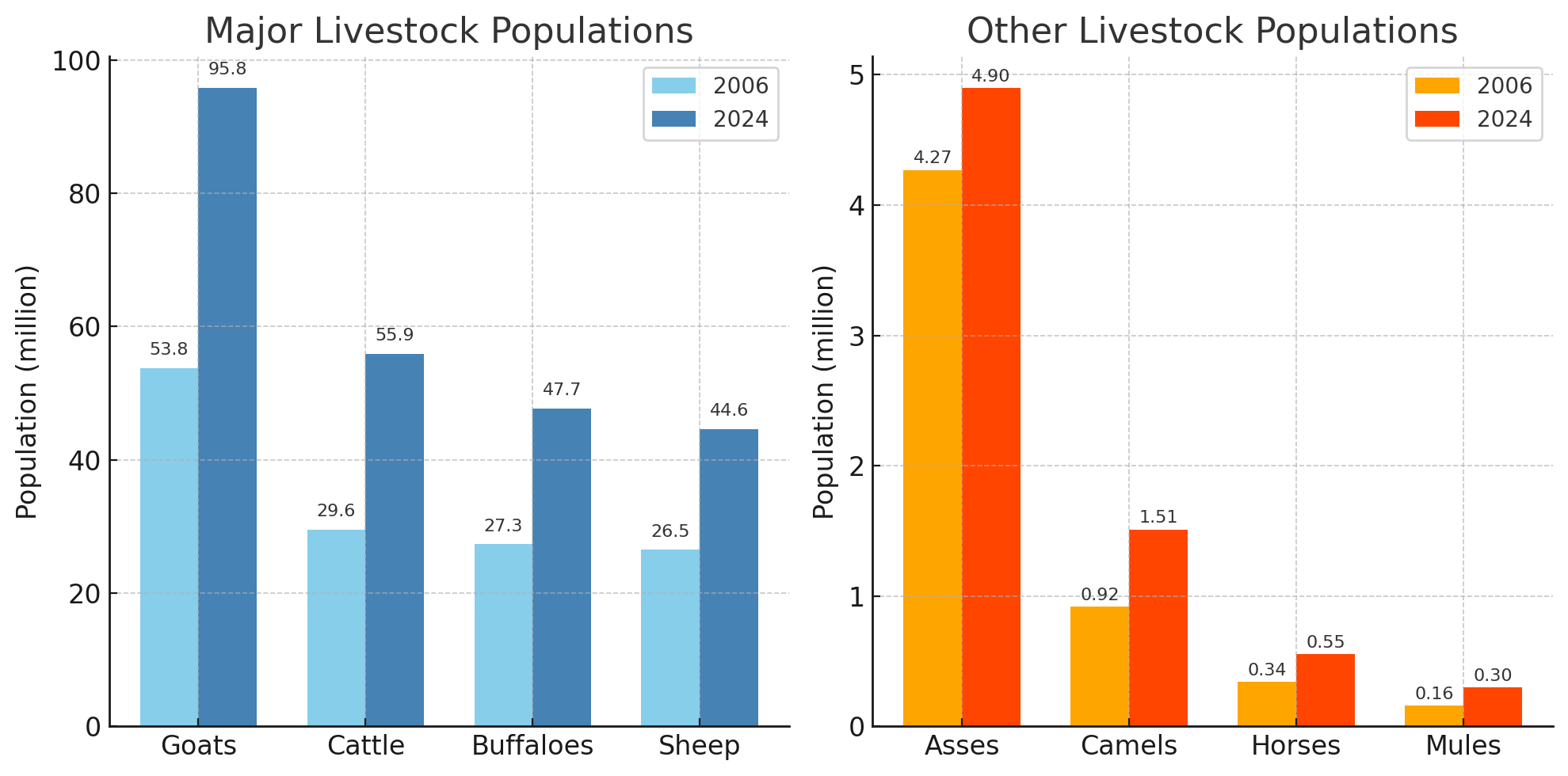
Figure 3: Growth in Pakistan’s livestock population between 2006 and 2024. Left: Major livestock species (goats, cattle, buffaloes, sheep) nearly doubled over 18 years. Right: Other livestock (asses, camels, horses, mules) also increased, though at varying rates. Data source: Pakistan Livestock Census 2006 and Agricultural Census 2024.
These increases underscore that livestock is the most dynamic sub-sector of agriculture today – indeed it contributes about 63% of agricultural GDP and around 3% of total exports. The census data specifically note that Punjab holds the largest share of the national herd, leading in cattle and buffalo numbers. Punjab alone has 26.97 million cattle and 29.56 million buffaloes. This aligns with Punjab’s status as the heart of Pakistan’s milk production – its mix of small and commercial dairy farms have proliferated. Sindh follows with roughly 50.0 million total animals, including a strong buffalo population (13.46 million) and cattle. Sindh’s irrigated agriculture supports many buffalo and cattle in mixed crop-livestock systems, especially around urban centers with high milk demand. Khyber Pakhtunkhwa (KPK) has about 48.7 million animals, notable for having more goats (22.49 million) than any other province except Punjab. Goats thrive in KP’s hills, and the province uniquely also has yak/dzomo (about 2,000 head, a type of high-altitude cattle) in its far north. Balochistan accounts for ~47.9 million livestock, distinguished by the largest share of camels (0.772 million, over 50% of the national camel herd) and a very large population of sheep (18.8 million, the highest of any province) as well as goats. This reflects Balochistan’s arid rangelands and nomadic pastoral traditions.
The right panel of Figure 3 shows trends for “other” livestock: asses (donkeys) increased slightly from 4.27 million (2006) to 4.90 million; horses grew from 0.34 to 0.553 million; mules from 0.16 to 0.297 million; and camels from 0.92 to 1.51 million. The equine population (horses, mules, donkeys) is relatively static or slow-growing compared to ruminants, likely because mechanization is gradually reducing the use of draft animals. Still, nearly 5 million donkeys is a reminder that pack animals remain important for transport in many rural areas and peri-urban economies (Pakistan actually has one of the largest donkey populations globally). The camel increase (64% over 18 years) suggests that camels remain valuable in certain communities for transport, milk, or meat, and perhaps climate change favors hardier camels in desertifying areas. Islamabad Capital Territory (ICT), not shown in the figure due to its tiny share, has only around 0.36 million total animals – less than 1% of the national herd.
This livestock expansion presents both opportunities and challenges. On the positive side, a larger livestock herd has underpinned growth in milk and meat production. Pakistan is now one of the top producers of milk globally. The census data imply that the buffalo population growth (and improved per-animal yields) has driven milk output upward; the Economic Survey 2024-25 reported a 3.2% annual increase in milk production recently. Meat production (beef, mutton, poultry) has also been rising around 2–3% annually. The booming goat population is particularly significant for meat supply (goat meat is culturally preferred as mutton). Livestock also serve as a “living bank” for rural households – a form of savings and insurance that can be sold or exchanged in times of need. The census’s integration of livestock data allows us to see how many agricultural households rely on livestock: out of ~19.8 million agricultural households, about 8.1 million do not have cropland, implying these are purely livestock (or machinery) households. This means millions of families, especially in pastoral areas and rain-fed zones, depend entirely on livestock for their livelihood. Policies must not overlook these households who might not till land but raise animals.
Key Challenges: The huge increase in livestock numbers also raises red flags. One is the question of feed and fodder availability. Does Pakistan have enough feed resources (green fodder, crop residues, feed concentrates) to adequately nourish 250+ million animals In many regions, feed shortages already lead to low productivity – animals are often underfed, especially in dry seasons. Overstocking can lead to rangeland degradation, as seen in Balochistan where communal grazing lands are under pressure. Another challenge is animal health: With more animals, the risk and incidence of diseases (foot-and-mouth disease, PPR in goats, brucellosis, etc.) can rise if veterinary services don’t keep pace. The census indicates that only a small fraction of livestock households are commercial; most are smallholders with poor access to vet care and breeding services. This contributes to low per-animal productivity. For example, despite being the 2nd largest milk producer, Pakistan’s milk yield per cow/buffalo is much lower than global benchmarks due to local breeds and suboptimal feeding. There is also an environmental impact to consider – more ruminants mean more methane emissions (Pakistan’s livestock are a major source of greenhouse gases), and unmanaged waste from livestock can pollute water bodies. Additionally, rapid growth in livestock without modern management raises quality and value-chain issues: how to ensure milk hygiene, how to connect the surplus animals to markets efficiently, etc. Currently, a lot of potential (in meat exports, dairy processing) remains untapped partly because of fragmented production and lack of cold chains. Finally, the census’s livestock data expose some regional vulnerabilities – e.g., Balochistan’s economy is heavily livestock-dependent, so droughts or animal disease outbreaks there have outsized impacts on incomes. Similarly, areas with large livestock holdings need strategies for climate adaptation, as animals can suffer in extreme heat or floods (witnessed in recent years’ floods where thousands of livestock perished).
Policy Recommendations (Livestock): To capitalize on the livestock boom and mitigate its downsides, Pakistan needs a multi-pronged livestock development strategy. First, enhance feed and fodder production – this can be done by incentivizing fodder crops (improved varieties of sorghum, berseem, etc.), promoting silage making and feed conservation for lean periods, and using crop residues efficiently (the integrated data show where crop-livestock integration is high, and those linkages should be strengthened). Research into high-yielding fodder and efficient feed formulations will support the growing herd. Second, invest in veterinary services and disease control. Expanding the network of para-vets in villages, mass vaccination campaigns (for FMD, PPR, etc.), and surveillance systems will protect animal health. The census data can help identify pockets with high livestock density where vet resources should be concentrated. Third, pursue genetic improvement for higher productivity: implementing breed improvement programs (through artificial insemination or community breeding centers) especially for cattle and buffalo can gradually improve milk and meat yields per animal, meaning fewer animals could produce the same output – easing pressure on resources. Indigenous breeds that are climate-resilient (like Sahiwal cattle, Azikheli buffalo, etc.) should be conserved and improved rather than replaced wholesale. Fourth, empower the many small livestock keepers through training and organization. Supporting dairy cooperatives or meat producer associations can help smallholders gain market access and bargaining power. For example, milk collection systems can be expanded so that even small farmers can sell surplus milk to cooling centers, improving incomes and reducing waste. Providing microcredit for women who often manage backyard poultry and small ruminants will further uplift household nutrition and income – women are key players in livestock care in rural Pakistan, though they seldom receive formal support.
Finally, the government should leverage the growing herd for economic gains by developing value chains: improving slaughterhouses, meat processing facilities, and quality control to meet export standards could turn the livestock surge into export earnings (Pakistan’s halal meat export potential is still largely untapped). At the same time, extension services should promote environmental best practices – like biogas from animal waste, rotational grazing to protect rangelands, and improved manure management to reduce emissions and produce organic fertilizer. By viewing livestock not just as numbers to celebrate but as an evolving system to manage, Pakistan can ensure this livestock wealth translates into nutrition security, income growth, and export revenue without degrading the resource base.
Farm Mechanization: Modernizing Agriculture
Agricultural mechanization in Pakistan has historically lagged behind comparators, but the 2024 census provides some encouraging signs as well as areas needing progress. The integrated census collected data on ownership of farm machinery (like tractors, harvesters, tube wells, etc.) as part of the agricultural household survey. While the full detailed results on machinery are not excerpted in the summary report, previous machinery censuses and ancillary information can help contextualize the likely trends. The overall impression is that mechanization has increased over the past decades – for instance, the number of tractors in Pakistan has risen significantly – yet many small farms still rely on traditional tools or animate power (bullocks/donkeys) for farm operations.
According to the last Agricultural Machinery Census in 2004, Pakistan had about 401,663 tractors in use, which was already a substantial increase from roughly 253,000 in 1994 and 157,000 in 1984. By linear extrapolation and considering domestic production, it is likely that by 2024 the tractor fleet has roughly doubled from the 2004 level (possibly on the order of 800,000+ tractors in the country). Indeed, Pakistan’s domestic tractor industry manufactures 50,000–70,000 units in good years, although economic slowdowns have caused fluctuations. The census likely captured data on how many agricultural households own tractors. Many medium to large farmers have acquired tractors due to government subsidy schemes and credit programs over the years (e.g. the Punjab government’s “Green Tractor” subsidy in the 2010s). We can infer that ownership is concentrated: Punjab and Sindh, with their larger farm sizes and higher incomes, probably account for the bulk of tractors, while in KPK and Balochistan fewer households own tractors but they may use communal or hired services when needed. For example, Balochistan saw a 106% growth in tractor numbers between 1994 and 2004, reflecting efforts to mechanize in canal-irrigated pockets of that province.
Beyond tractors, tube wells and irrigation pumps are another critical form of “mechanization” (motive power applied to water extraction). The census data on irrigation sources indicate that there are well over a million private tube wells now operating (given the area under groundwater irrigation). The spread of affordable diesel and electric pumps since the 2000s enabled many farmers in Punjab and Balochistan especially to install their own wells – mechanizing the water supply. Other machinery includes harvesting and post-harvest equipment. The census for the first time covered combine harvesters usage; Pakistan has seen increasing use of combine harvesters for wheat and rice harvest in the past decade, mostly through custom service providers who move machines from field to field. Still, the density of combine harvesters is low relative to crop area. Threshers for wheat and maize are very common (often owned at village level), and small-scale machinery like chaff cutters, sugarcane crushers, and rice husking machines are widespread in farming communities. Another new aspect captured is greenhouse and tunnel farming technology – the report mentions that the census covered adoption of greenhouse and tunnel farming practices. This likely shows up as a relatively small number of farms (probably a few thousand) using plastic tunnels for off-season vegetable production or nurseries under greenhouse cover, mostly in peri-urban areas. It’s a nascent trend but an important one for high-value agriculture.
Despite these advancements, most smallholders remain under-mechanized. A telling statistic: with (roughly estimated) 0.8–1.0 million tractors for 11.7 million farms, there is roughly 1 tractor per 12–15 farms. In reality, among farms under 5 acres (80% of all farms), very few own machinery – they typically either hire tractors or continue to use animal traction for plowing and transport. The census’s definition of “agricultural household” included those owning agricultural machinery even if they had no land. Such “machinery-only” households are likely those who run tractor rental businesses or custom services. The existence of these suggests a developing market for mechanization services, which is a positive trend; farmers who cannot afford their own tractor can rent one relatively easily in many areas. Nonetheless, constraints like high fuel costs and fragmented land (making it hard for tractors to maneuver in tiny plots) limit usage. Mechanization is not just about tractors – it also includes power tillers, planters, sprayers, and other implements. Adoption of these implements, especially precision planters or drip irrigation pumps, is still limited outside progressive farms. Many processes (like planting, weeding, picking of cotton, harvesting of sugarcane) remain labor-intensive and could benefit from mechanization or improved tools.
Key Challenges: One major challenge is the affordability and scale-appropriateness of machinery for small farms. A tractor is a costly asset ). Small farmers usually cannot purchase such equipment without subsidies or group ownership. Even smaller machines like walking tractors or specialized planters may be out of reach. This leads to a situation where mechanization can widen inequalities – larger farmers forge ahead with technology while smallholders lag. Another challenge is the lack of mechanization in certain tasks, resulting in inefficiency and crop losses. For example, despite more tractors for land prep, the absence of affordable harvest machinery for crops like cotton means harvest is manual, which can be slow and result in wastage. Similarly, limited mechanization in post-harvest handling (drying, storage) contributes to significant losses. The maintenance and quality of machinery is also an issue: many tractors in use are old and overhauled; extension services for machinery (guiding farmers on proper use and upkeep) are minimal. Fragmented lands and small fields in many parts of KPK and Punjab make it physically difficult for large machines to operate, reducing the benefit of owning them. Lastly, a newer challenge is the human resource aspect – as mechanization expands, there is a need for skilled operators, mechanics, and spare parts supply chains, which rural areas often lack. Introducing new tech like precision planters or drones requires training that is currently scarce.
Policy Recommendations (Mechanization): To boost farm mechanization in an inclusive manner, the government and private sector should collaborate on several fronts. Subsidy and credit schemes targeted at small and medium farmers can help them acquire appropriate machinery. Pakistan has experience with tractor subsidy programs; future schemes should perhaps focus on smaller equipment (laser levelers, planters, etc.) and could be disbursed via matching grants. Promoting mechanization service providers is key – rather than each small farm owning a tractor, a rural entrepreneur could own one and provide services to dozens of farmers. This model can be strengthened by offering low-interest loans to such service providers and establishing machinery pools at the village or union council level. Research and development should aim at “right-sized” machinery for Pakistan’s conditions – for instance, two-wheel walking tractors or mini combined harvesters suitable for 2-5 acre farms, which countries like China and Thailand have developed, could be introduced via trials and subsidies. The government can reduce import duties on specialized farm machinery not made locally to improve access.
Capacity building is also important: establishing training centers for machinery operation and repair would create a cadre of local youth skilled in running and fixing farm equipment, creating jobs and supporting mechanization. Extension services should include a mechanization wing that advises farmers on which implements save labor or improve yields (for example, educating farmers on zero-till drills for wheat sowing into rice stubble, which has shown success in Punjab). Additionally, encouraging innovative technologies through pilot projects – such as solar-powered irrigation pumps (to reduce diesel costs and emissions), or the use of drones for crop spraying – could demonstrate efficacy and build demand if results are positive. The census’s identification of modern practices like greenhouse and drip irrigation adoption suggests pockets of innovation; these could be scaled up by providing technical support and access to finance. Crucially, mechanization policy must integrate with land and water policies: as land consolidates (even via cooperative use) and as irrigation becomes more reliable, the stage is set for higher mechanization, which in turn can boost productivity and reduce post-harvest losses. With thoughtful policies, Pakistan can leapfrog to more advanced and climate-smart farm machinery, ensuring that even smallholders benefit from the labor-saving and income-boosting potential of mechanization.
Digital Data Collection: A New Era for Agricultural Statistics
The 7th Agricultural Census was not only about counting farms and animals – it was also a pioneering exercise in how data are collected. Termed an “Integrated Digital Count,” this census leveraged technology to improve accuracy, transparency, and timeliness. It’s worth reflecting on these innovations, as they have implications for governance and future data efforts in Pakistan’s agriculture sector.
Traditionally, censuses in Pakistan were paper-based: enumerators would fill paper questionnaires, which would then be manually coded and entered into computers – a slow process prone to errors. In 2024, however, the Pakistan Bureau of Statistics (PBS) deployed tablet computers with custom software to all field enumerators. Each agricultural household surveyed was geo-tagged with coordinates, meaning the location of farms and livestock holdings are now mapped. Supervisors could monitor progress in real-time via GIS dashboards and a centralized system that showed how many households in each area had been counted. If any area was missed or if data showed anomalies, corrective teams could be dispatched quickly. This real-time monitoring, combined with a complaint management hotline for the public to report if their household was missed, greatly enhanced coverage and confidence in the data. The census was executed in two phases – splitting the operation ensured seasonal constraints didn’t hinder access. With digital tools, the PBS was able to complete data collection and processing for a massive 19.8 million households by mid-2025, whereas previous censuses would take years to publish results.
Another achievement was integrating three domains (agriculture, livestock, machinery) into one questionnaire. This required significant training and coordination. The PBS trained master trainers from each province, including staff from agriculture extension, livestock departments, etc., who in turn trained district enumerators. The tablets had built-in checks – for instance, if an enumerator entered an improbably large number of animals for a small household, the software could flag it, reducing data entry errors. The use of an upgraded data center at PBS for processing meant that all the information flowed into a central database securely each day. Cost-wise, while purchasing tablets and developing software is an upfront expense, PBS noted that using its in-house data center and digital approach actually reduced costs compared to a lengthy paper census. Importantly, the digital census approach enhances data granularity. Now that each household is geo-referenced, policymakers can drill down to very local levels – for example, analyzing village-level farm size distribution or mapping hotspots of a particular livestock species. This spatial dimension is invaluable for targeted interventions (like knowing exactly which areas have many tube wells impacting groundwater).
The success of the digital census demonstrates capacity that can be utilized for other surveys. It sets a precedent for conducting large-scale surveys in Pakistan with technology, improving overall governance. For farmers and stakeholders, it means data is more current and reliable. The year 2024 will not be remembered just for the numbers it measured, but for transforming the statistical system behind those numbers. The PBS has effectively built a digital sampling frame of agriculture that can be updated or used for more frequent surveys, rather than waiting another decade. They have also engaged stakeholders in a technologically savvy operation, which bodes well for future collaborations.
Key Challenges and Next Steps: While the digital census was a success, maintaining and utilizing the wealth of data collected is the next challenge. Data must be analyzed and disseminated widely – not just in a static report but through interactive platforms or open data portals so that researchers, provincial planners, and even farmers’ organizations can leverage it. Privacy and data security need to be ensured when sharing granular data. Another challenge is to institutionalize the digital methods: PBS and provincial stats offices should preserve the tablets, software, and skills for the next rounds of surveys. Technology evolves rapidly, so continued investment in upgrading software (perhaps moving to even smartphone-based systems or adding remote sensing integration) will be needed. The human element is key too – the enthusiasm and training of enumerators was vital; keeping that pool of trained personnel engaged for interim surveys (like annual crop surveys or livestock sample surveys) could maximize the return on training investment.
One limitation observed was that some remote areas had connectivity issues; enumerators sometimes collected data offline on tablets and uploaded later. Expanding rural connectivity (internet access) will make such digital efforts smoother. Lastly, there is a need to integrate the agricultural census data with other digital data – for example, linking it with the digital population census 2023 data, or land records digitization, to unlock deeper insights. If, say, land ownership records become digital, one could overlay them with the census farm locations to address land tenure formalization. Similarly, linking livestock numbers with veterinary clinic locations can show service gaps. These integrations require inter-departmental cooperation and data-sharing agreements that should be pursued.
Policy Recommendations (Digital Data Utilization): The government should establish a mechanism to ensure continuous use and updating of the digital agricultural data. One idea is to create an Agriculture Data Dashboard for Pakistan – a public platform where key census indicators are mapped and updated with new survey data or remote sensing (e.g., crop acreage estimates from satellites). This would keep data alive and useful for decision-making on things like input distribution or disaster relief (knowing which areas have many livestock to vaccinate, for instance). The PBS could collaborate with the Ministry of National Food Security & Research to conduct more frequent sample-based surveys (e.g. every 1–2 years) using the census frame and tablets, focusing on specific topics like crop yields or farm incomes. This would address the data gaps between censuses. It’s also recommended to document the lessons learned from this digital census in detail and perhaps offer training to other national statistical offices in the region – Pakistan’s success can be a model for others in South Asia.
From a policy perspective, having this rich data is an opportunity to practice evidence-based policymaking in agriculture. For each of the themes discussed (land, water, livestock, etc.), policymakers can target interventions more precisely. For example, knowing exactly where small farms are concentrated and lack mechanization can help in planning custom hiring centers there. Or knowing livestock densities can inform where to build new vet hospitals. Therefore, a recommendation is for each provincial agriculture department to set up a data analysis unit that works with PBS data to inform its policies. Capacity building in data analytics at the provincial level will help translate numbers into action. Lastly, planning for the next census should start early – given the decision to move to a five-year cycle, the next integrated census might be in 2029. Continuous improvement of the questionnaire (perhaps adding modules on emerging issues like climate adaptation practices or precision agriculture) and the tech platform will ensure that future data is even more relevant.
Conclusion
The 7th Agricultural Census 2024 offers a comprehensive and up-to-date mirror for Pakistan’s agriculture – reflecting significant changes over the past decade and illuminating where interventions are needed. The key themes that emerge from the data tell a story of both progress and persistent challenges. Land is more subdivided than ever, yet more farmers own their land outright, providing a basis for empowerment if matched with support for smallholders. Water usage has intensified with irrigation expansion, improving resilience to rainfall variability but raising alarms for sustainable management. Livestock have proliferated, opening avenues for increased dairy and meat production, but also demanding better feed, health, and market systems to avoid resource strain. Mechanization is gradually taking root, especially benefiting larger farms, while the vast smallholder majority still awaits appropriate technology to ease their labor burden and improve productivity. And cross-cutting all these is the advent of digital data collection, which has revolutionized how we understand the agricultural landscape and should likewise revolutionize how we plan and monitor agricultural policies.
Moving forward, Pakistan’s policymakers are equipped with an unprecedented level of detail from this census – down to each tehsil and village. The data underscores the need for differentiated strategies: what works in Punjab’s canal-irrigated villages (e.g. enhancing mechanization and value-addition for dairy) might not work in Balochistan’s pastoral communities, where water infrastructure and rangeland management are priorities. Provincial analyses, as included in the census report, should guide provincial budgets and programs. Federally, the census supports initiatives under the National Food Security Policy and the Agriculture Transformation Plan by identifying gaps – for instance, the low adoption of modern irrigation justifies boosting the ongoing water-saving schemes, and the fragmentation of land suggests urgency in extension approaches tailored to small farms.
Crucially, the census highlights the human dimension of agriculture – nearly 20 million households are engaged in this sector. Policies, therefore, must center on improving livelihoods: raising incomes of small farmers, making farming attractive and viable for youth (who might otherwise exit agriculture), and ensuring food security for all. With climate change impacts accelerating (as seen by recent floods and droughts), the rich dataset can help climate-smart planning – identifying which areas and farming systems are most vulnerable and tracking adoption of adaptation measures over time.
The commentary above has provided specific recommendations under each theme, but some overarching recommendations bear repeating: invest in agricultural research and extension (to improve yields and resource efficiency so that small farms can be productive); improve rural infrastructure (farm-to-market roads, storage, electricity for value addition) to support the structural transformation of agriculture; and strengthen institutions and markets (such as cooperatives, commodity boards, and digital marketplaces) so that farmers can get fair prices and access services. The government should also maintain the momentum in data systems – the agriculture census should not be a once-in-a-decade splash but part of a culture of evidence where progress is measured and transparent. The success of the digital census shows that Pakistan can execute complex reforms; similar resolve is needed to implement the policy reforms indicated by the census evidence.
In conclusion, Pakistan’s 2024 agricultural census does more than count farms and livestock – it shines a light on the path to a more modern, efficient, and equitable agricultural sector. By heeding the lessons from the data and acting on the recommendations for land, water, livestock, mechanization, and data use, policymakers can help transform Pakistani agriculture from a low-productivity, vulnerable sector into a high-value, sustainable enterprise that ensures food security, raises rural incomes, and contributes robustly to national development. The coming years will test our ability to translate data into action; with collective effort, the seeds of progress captured in this census can be nurtured into a bounty of prosperity for Pakistan’s farmers and consumers alike.
References
- Pakistan Bureau of Statistics. (2025). 7th Agricultural Census of Pakistan 2024 -- Main Findings Report. Ministry of Planning, Development & Special Initiatives, Government of Pakistan. Retrieved from https://www.pbs.gov.pk/sites/default/files/agriculture/agri_census_2024/Agricultural_Census_Main_Findings_Report.pdf
- Pakistan Bureau of Statistics. (2006). Livestock Census 2006 -- All Pakistan Report. Statistics Division, Government of Pakistan.
- Associated Press of Pakistan. (2025, August 7). 7th Agricultural Census 2024: Integrated Digital Count unveiled. Retrieved from https://www.app.com.pk/business/7th-agricultural-census-2024-integrated-digital-count-unveiled/
- Business Recorder. (2005, November 14). Agricultural Machinery Censuses 2004 released. Retrieved from https://www.brecorder.com/news/3220456
- Government of Pakistan, Finance Division. (2024). Pakistan Economic Survey 2023-24, Chapter 2: Agriculture. Economic Adviser's Wing.